
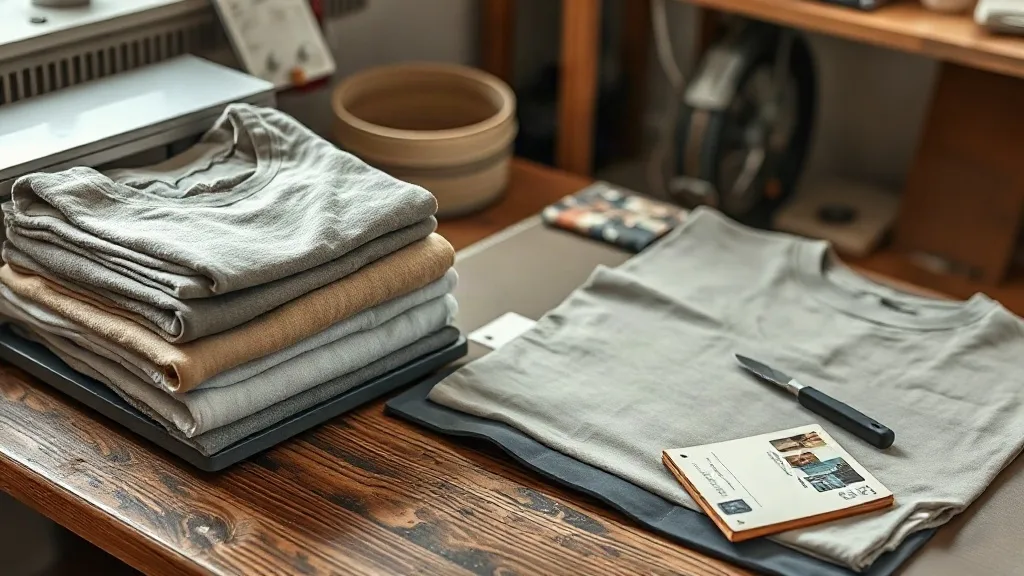
Walk into any busy print shop and you will hear the same complaint from the back room: the transfer looked perfect on the screen, but the finished shirt tells a different story. Nine times out of ten, the press settings were fine. The blank was the problem. Choosing the right garment is half the battle in DTF production, and that is exactly where shaka wear earns its place on the shelf. Their blanks are built for volume work, but they are not interchangeable. A tee that prints beautifully on one job can fight you on the next if the fabric weight, weave, or dye lot does not match your transfer film.
This guide is not about press temperatures or peel times. It is about the decision you make before the heat press ever closes: which blank goes with which job. Get that right and the rest of your DTF workflow becomes noticeably quieter.
Why the Blank Matters More Than Most Shops Admit
DTF transfers are essentially a layer of pigment bonded to a thermoplastic adhesive. That adhesive does not just sit on top of the fabric. It flows into the fibers under heat and pressure, then locks in as it cools. On a tight, smooth, ringspun surface, the powder melts into a shallow, even layer. On a loose, slubby, or heavily brushed fabric, it has to travel further and settle unevenly. The result is a print that looks slightly softer, slightly duller, or in the worst cases, cracked at the edges after a few washes.
This is why two shirts from the same brand can produce wildly different results. Shaka Wear's catalog spans lightweight retail tees, heavyweight streetwear cuts, and fleece. Each of those categories behaves differently under a DTF transfer, and each one needs a slightly different approach.
Fabric weight is the first filter
Lightweight cotton, roughly in the 4 to 5 ounce range, gives you the crispest detail. Fine lines, small text, and intricate gradients hold up well because the adhesive has nowhere to hide. The tradeoff is that very light fabric can show transfer texture if your film is heavy or your pressure is off. Heavyweight cotton, in the 6.5 to 7 ounce range, absorbs the adhesive more readily and produces a softer hand, but very fine details can lose a touch of sharpness. For bold graphics, large logos, and back prints, heavyweight is often the better canvas. For fine typography and small chest prints, go lighter.
Weave and surface finish decide the hand feel
Ringspun cotton has a smoother, denser surface than open-end cotton, and that smoothness translates directly into a cleaner transfer. Heathered fabrics, slub yarns, and brushed interiors introduce texture that the adhesive has to bridge. If you are printing on a heathered tee, expect a slightly more vintage look. That is not a defect. It is the fabric talking. Pair heathered blanks with designs that already lean into that aesthetic rather than razor-sharp vector art.
Matching Shaka Wear Styles to Common DTF Jobs
Most shops run three or four recurring job types. Here is how to think about blank selection for each one.
- Team and event shirts: These need durability and a low reject rate. A mid-weight ringspun tee handles repeated washes and holds a large front or back print without distortion. Keep your film layout consistent across sizes so the print position stays predictable.
- Streetwear drops: Customers want a heavier feel and a boxier fit. Heavyweight cotton gives the print a substantial base, and the softer hand that comes with it reads as premium rather than cheap. This is where shaka wear heavyweight cuts shine.
- Retail-ready small runs: Small chest logos and left-chest marks benefit from lighter, smoother fabric. The print stays crisp, and the garment feels like something a customer would buy off a rack.
- Fleece and hoodies: Brushed interiors and heavier face fabrics need more pressure and a slightly longer dwell. Always test on an offcut before committing a full run.
Color and dye lot consistency
White and light garments are forgiving. Dark garments, especially deep blacks and saturated colors, demand a white underbase in your transfer and a very clean press. Any residual moisture in the fabric can cause the adhesive to bubble, so pre-press dark blanks for a few seconds to drive off moisture before applying the film. Shaka Wear's dark styles are consistent across dye lots in our experience, but always verify a new batch against your previous run before you promise a customer a perfect color match.
Building a Gangsheet That Fits Your Blank Choices
Once you know which blanks you are running, the next step is laying out your transfers efficiently. This is where a DTF Gangsheet Builder saves real time. Instead of guessing at spacing, you upload your artwork, set your sizes, and the builder packs everything onto a single sheet with consistent gaps. That consistency matters more than most people realize: uniform spacing means uniform cutting, and uniform cutting means fewer placement errors on the press.
A practical habit is to group jobs by blank type on the same gangsheet. If you are printing for a run of lightweight tees, keep those transfers together so you can press them in one batch at the same settings. Mixing lightweight and heavyweight transfers on one sheet is fine for the printer, but it forces you to reset your press between garments, which slows everything down.
Size scaling and placement
Remember that a design scaled for a large heavyweight tee will look oversized on a small lightweight tee. Scale your artwork per size, not per order. The gangsheet builder lets you duplicate and resize quickly, so take the extra minute to produce proper size runs. Your customers will notice the difference immediately.
Common Mistakes That Cost Print Shops Money
Most DTF failures we see trace back to a handful of habits. Avoiding them is cheaper than fixing them.
- Skipping the pre-press. A few seconds of heat before the transfer removes moisture and wrinkles. It is the single easiest improvement most shops can make.
- Using one pressure setting for every blank. Lightweight and heavyweight fabrics need different pressure. Test each new style before a full run.
- Ignoring fabric texture. Printing fine detail on a slub or heathered blank will always look softer. Choose designs that suit the surface.
- Overloading the gangsheet. Cramming transfers too close together makes cutting sloppy. Leave a consistent margin.
- Not washing a sample. A single wash test on a new blank tells you more than any spec sheet.
Frequently Asked Questions
Does Shaka Wear work well with DTF transfers?
Yes. Their cotton and fleece blanks are widely used in DTF production because the fabrics are consistent and hold adhesive well. The key is matching the specific style to the job rather than assuming every blank behaves the same.
What is the best Shaka Wear blank for a first DTF order?
Start with a mid-weight ringspun cotton tee in a light color. It is the most forgiving combination for learning your press settings, and it produces clean results across a wide range of designs.
Can I print DTF on heavyweight Shaka Wear tees?
Absolutely, and many shops prefer it for streetwear. Expect a slightly softer hand and a marginally less sharp edge on fine detail. Bold graphics and large prints look excellent on heavier cotton.
How do I keep gangsheet layouts consistent across sizes?
Use a gangsheet builder that lets you duplicate artwork and scale it per size, then keep a fixed gap between transfers. Consistent spacing keeps your cutting and pressing predictable.
Do I need different press settings for different Shaka Wear styles?
Usually yes, at least slightly. Lightweight cotton, heavyweight cotton, and fleece each respond differently to heat and pressure. Run a test garment from each category before committing to a full production run.
The Bottom Line for Busy Shops
Blank selection is not a detail you can delegate to guesswork. The right garment makes your transfers look sharper, your press work faster, and your customers happier. The next time you load a gangsheet, take thirty seconds to think about which blank it is destined for. That small pause is often the difference between a job that ships clean and a job that comes back.