
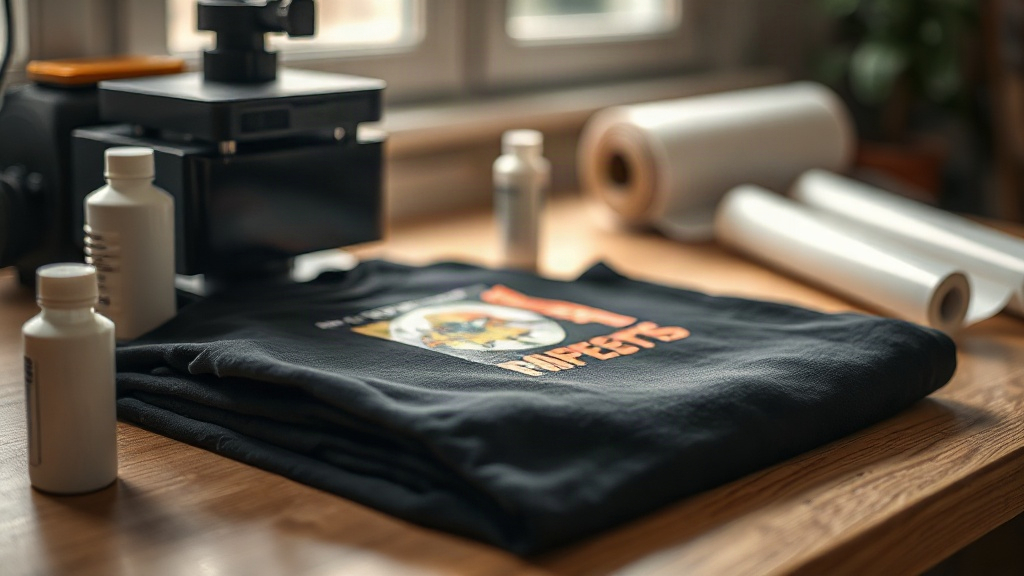
When a customer asks for a single hoodie with a full-color photo on the back, most traditional print shops either quote a high setup fee or turn the job away. That is exactly the gap DTF printing was built to fill. Direct-to-film transfers let you produce detailed, multicolor designs without screens, without color-count limits, and without ordering hundreds of pieces. For small brands, crafters, and side hustles, that changes the math on what is possible.
What DTF Printing Actually Is
DTF stands for direct-to-film. Instead of printing directly onto a shirt, the design is printed onto a special PET film in reverse. A hot-melt adhesive powder is applied to the wet ink, cured, and then the film is pressed onto fabric with heat. The adhesive bonds the ink layer to the garment while the film peels away.
The result is a soft, stretchy transfer that holds fine detail: gradients, tiny text, photographic shading, and thin outlines that would collapse in a screen-printing setup. Because the ink sits on a transfer rather than soaking into the weave, colors stay bright on dark fabrics, which is a common pain point with DTG.
How the Process Works, Step by Step
Understanding the workflow helps you troubleshoot problems later. Here is the sequence most shops follow.
1. Prepare and Print the Artwork
Designs are printed in mirror image onto a coated film. A dedicated DTF printer uses pigment inks and typically includes a white ink channel. White ink is printed first as a base layer, then the color layers go on top. That white base is what makes the print opaque on black, navy, or red garments.
2. Apply the Adhesive Powder
While the ink is still wet, the film passes through a powder shaker. Fine thermoplastic powder sticks to the ink and is shaken off the clear areas. Excess powder must be removed thoroughly, otherwise you get a speckled, gritty feel around the edges of the design.
3. Cure the Powder
The powdered film goes into a curing oven or under a heat source until the powder melts into a clear, slightly glossy layer. Under-curing leaves the transfer weak and prone to cracking. Over-curing makes the film brittle and can yellow the white ink. Most manufacturers publish a temperature and time range for their specific powder, and it is worth following it rather than guessing.
4. Press and Peel
The cured transfer is placed on the garment and pressed. After pressing, the film is peeled away. Some films are cold peel, some are hot peel, and some are warm peel. Using the wrong peel temperature is one of the most common reasons a beginner thinks their transfer failed when the print was actually fine.
Why DTF Has Grown So Quickly
The appeal is not just quality. It is flexibility.
- No screen setup means one-off orders are economically viable.
- Full-color and photographic designs cost the same as a one-color logo.
- Transfers can be printed ahead of time and stored, so press time is short.
- The same transfer works on cotton, polyester, blends, and many canvas or denim items.
- Small desktop units fit in a spare room, which lowers the barrier to entry.
For anyone running a print-on-demand store or selling at markets, that combination is hard to beat. You can print a batch of transfers on Monday and press them as orders arrive through the week.
DTF vs. DTG vs. Screen Printing
Each method has a niche, and knowing where DTF fits prevents wasted money.
Compared with DTG
Direct-to-garment printing sprays ink straight onto the shirt. It works well on 100% cotton but struggles on polyester and often looks faded on dark colors unless a pretreatment is applied. DTF transfers handle polyester and dark garments more reliably and usually feel slightly thicker.
Compared with Screen Printing
Screen printing is still the cheapest option per unit for large runs of simple designs. Its weakness is setup: each color needs its own screen, and short runs carry high fixed costs. DTF flips that, with low setup and higher per-unit cost.
Getting a Durable Result
Longevity comes down to a few controllable factors.
- Press with even pressure. Cold spots cause partial adhesion that fails after a few washes.
- Match the powder to the ink and film you use. Mixing brands can cause curing issues.
- Store unused transfers flat, away from humidity. Moisture degrades the adhesive layer.
- Wash garments inside out in cold water and avoid fabric softener, which coats the print.
- Test a new fabric before committing to a full order. Some coated or water-repellent textiles reject the adhesive entirely.
None of these steps are complicated, but skipping one usually shows up weeks later as a peeling edge or a cracked surface.
Common Mistakes Beginners Make
The most frequent problem is not enough powder removal. If the film feels sandy after curing, shake and brush it again. The second is pressing too hot for too long, which flattens the texture and can scorch synthetic fabrics. The third is peeling too early because the film still feels warm and the print looks ready. Give it the recommended time. Finally, do not stretch a freshly pressed garment to check the bond. Let it cool completely first.
Frequently Asked Questions
Can I use DTF transfers on 100% polyester?
Yes, and this is one of its strengths. Polyester and polyester blends press well at lower temperatures than cotton. Just reduce the press temperature to avoid melting or scorching the fabric, and always test a scrap piece first.
How long do DTF prints last after washing?
With correct pressing and care, a transfer typically outlasts the garment itself. Cold washing, inside-out drying, and no fabric softener are the habits that matter most. Heat from a dryer is the main enemy over time.
Do I need a special printer for DTF, or can I convert a regular one?
You need a printer with a white ink channel and pigment inks designed for film. Converting a standard CMYK printer is not practical because it cannot lay down the white base layer that makes the print opaque.
Is DTF more expensive than screen printing?
Per unit, yes, especially on large runs. But once you factor in screen setup, minimum order quantities, and the cost of holding inventory, DTF often wins for small batches, samples, and designs with many colors.
What fabrics should I avoid?
Water-repellent, heavily coated, or silicone-treated fabrics are problematic because the adhesive cannot grip the surface. Very stretchy activewear also needs a stretch-friendly press setting to avoid cracking.
If you are weighing whether to add DTF to your workflow, start with a small kit, a few test garments, and one design you know well. Once you can press a clean transfer consistently, the range of orders you can accept opens up considerably.